zoom_in Drag to zoom
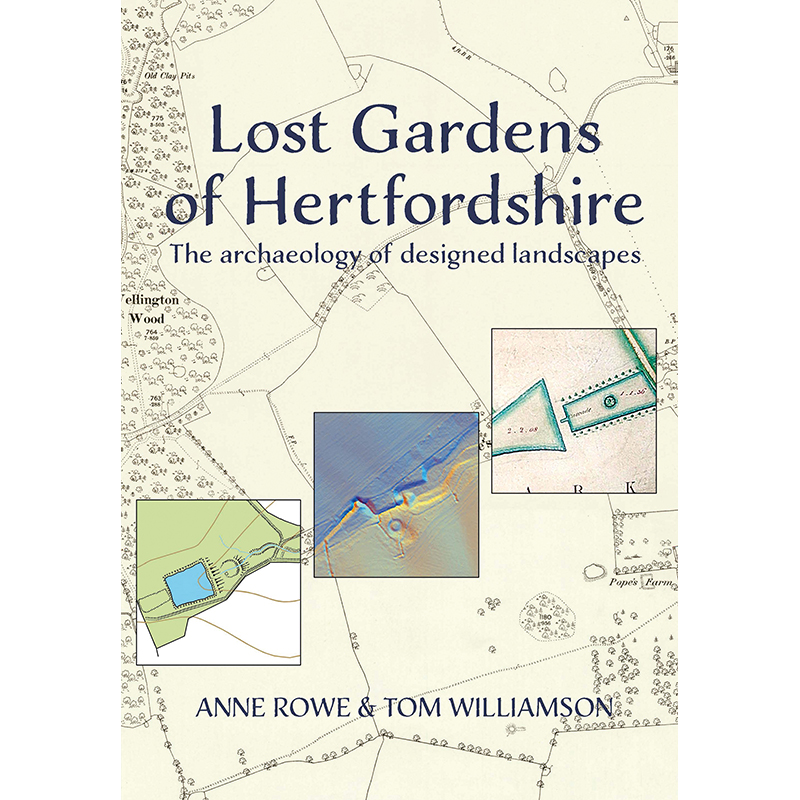
Lost Gardens of Hertfordshire
£18.99 / unit
About the book
Archaeology can transform our knowledge of the history of gardens and designed landscapes. Terraces, viewing mounts, pools and other features of the great gardens laid out around elite residences at various times in the past can leave impressive earthwork traces; long‐lost walls and garden buildings may be revealed by aerial photography or remote sensing techniques such as Lidar. Landscape parks, moreover, often contain the fossilised traces of the working countryside that was swept away when they were created, providing important information about the ‘genius of the place’ which was consulted when they were first designed.
Hertfordshire is particularly rich in such remains. Proximity to London ensured, from an early date, an active land market and a rapid turn‐over of properties: where estates were amalgamated with neighbours and mansions demolished, traces of their gardens were often preserved under grass or woodland. And the county's moderately undulating terrain provided opportunities for – in some cases necessitated – large schemes of earth movement to provide level areas for lawns and parterres, or to create terraces.
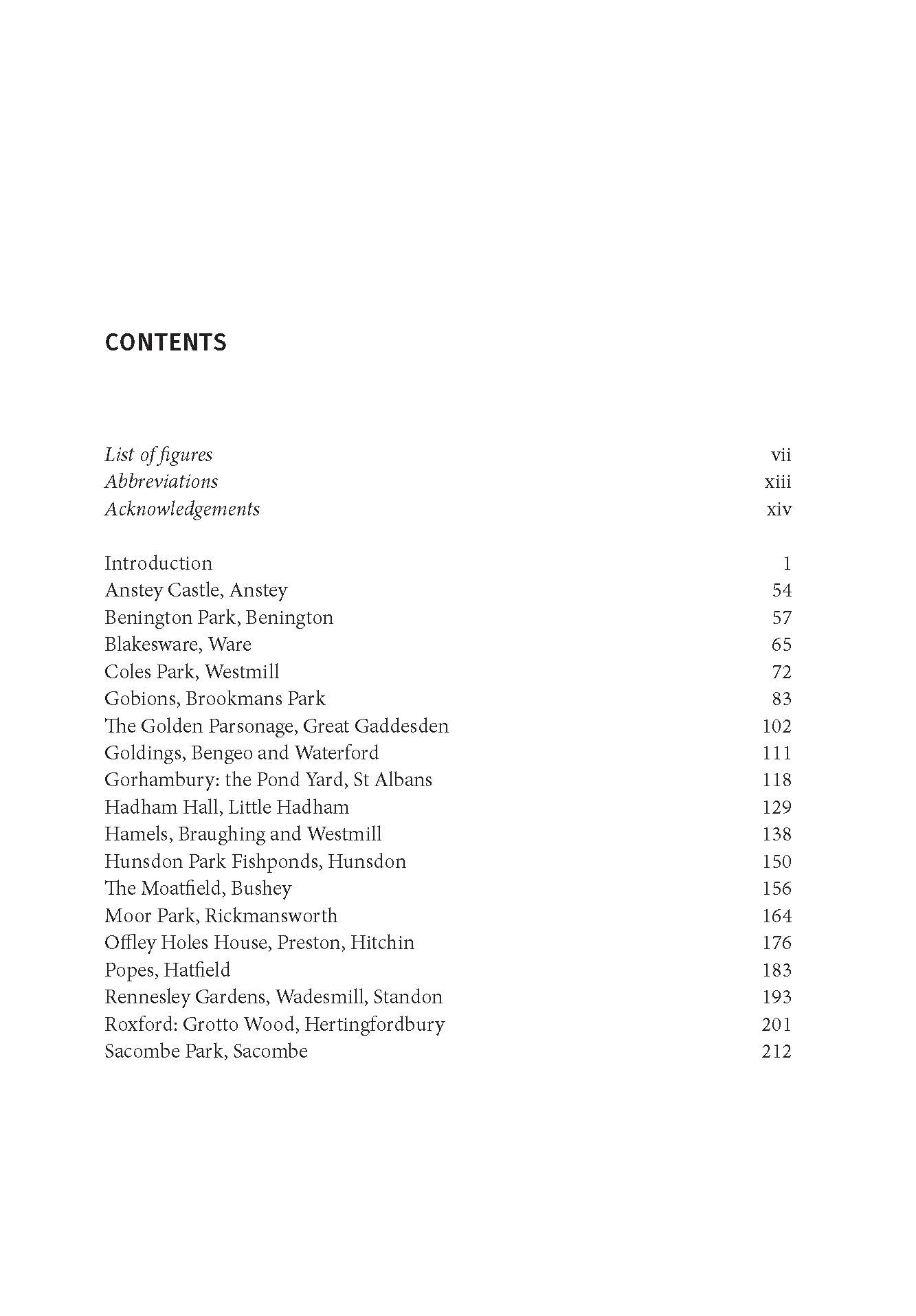
In this fascinating and innovative study – the outcome of several decades of research – systematic field survey and the analysis of aerial photographs and Lidar images are combined with the evidence of early maps and documents to reconstruct the appearance and history of more than twenty of Hertfordshire's ‘lost gardens’. An archaeological approach also allows us to see garden history in new ways, revealing aspects of design and patterns of development not readily apparent in the kinds of evidence conventionally employed by garden historians.
Clearly and accessibly written, and richly illustrated with a wealth of archaeological plans, aerial photographs, archive maps and early engravings and paintings, this book will be essential reading for all those interested in Hertfordshire's archaeology and garden history, as well as for students of garden and landscape history more generally.
Anne Rowe is a landscape historian who coordinated research for the Hertfordshire Gardens Trust alongside Tom Williamson for 24 years from 1998. Publications include Medieval Parks of Hertfordshire (2009 & 2019), Hertfordshire: A landscape history, co-authored with Tom (2013), and Tudor & Early Stuart Parks of Hertfordshire (2019). Awarded a PhD by publication in 2020, Anne has recently been working with the Hertfordshire Environmental Record Centre to update the county's Ancient Woodland Inventory.
Tom Williamson is Emeritus Professor of Landscape History at the University of East Anglia. A native of Hertfordshire, his enthusiastic support and encouragement has underpinned the notable productivity of the HGT Research Group since the 1990s. He has written extensively on landscape archaeology and garden history.
ISBN 9781912260751, Feb 2026, 340pp, Paperback
Reviews
“This unique record of the shifting fortunes of Hertfordshire landowners and the changing fashions that shaped the county's parks and gardens presents evidence uncovered and collated by the authors through systematic work on key sites. Anne Rowe and Tom Williamson combine their deep knowledge of the Hertfordshire landscape to produce a collection of compelling case studies. From Henry VIII's fishponds and Francis Bacon's water gardens, through the parks and gardens of newly rich incomers in the sixteenth and seventeenth centuries, to the eighteenth‐century landscapes of Bridgeman and Brown, the research is clearly described and the results beautifully presented. This book is an invaluable addition to the county history and the wider literature of garden and landscape history, and a superb demonstration of historical landscape research carried out to the highest standards.” Deborah Spring, Author
“This work can be seen as a clarion call to those who are entrusted with our landscape to delve deeper and to protect what is our history. It can also be seen as an example to be applied elsewhere in all the counties bordering our large towns and cities, currently being swallowed up by development.” Kate Harwood, Garden History