zoom_in Drag to zoom
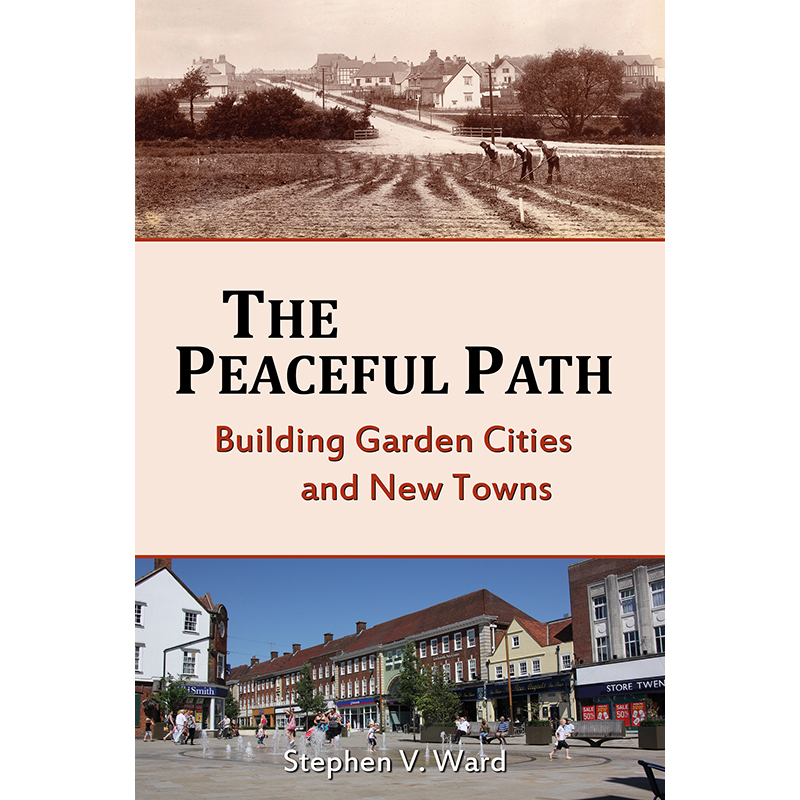
The Peaceful Path
£16.99 / unit
About the book
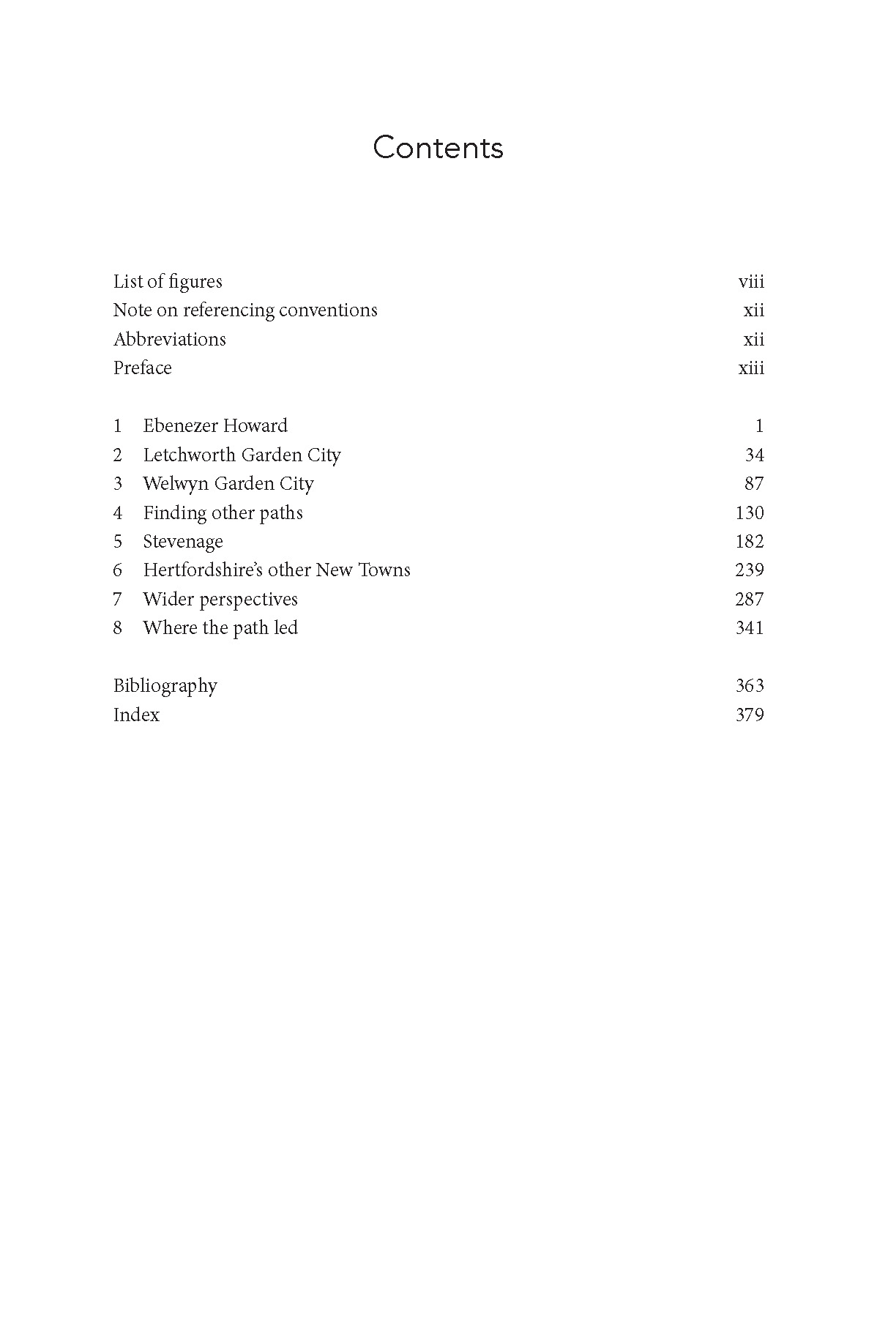
The title of this book is taken from Ebenezer Howard's visionary tract To-morrow: A Peaceful Path to Real Reform. Published in 1898 as a manifesto for social reform via the creation of Garden Cities, it proposed a new way of providing cheap and healthy homes, workplaces and green spaces in balance in cohesive new communities, underpinned by radical ideas about collective land ownership. While Howard's vision had international impact, in this book planning historian Stephen Ward largely honours the special place that Hertfordshire occupies on the peaceful path, beginning with the development of Letchworth and Welwyn Garden Cities. Both were established with Howard's personal involvement and slowly achieved most of his aims; both also emerged as havens for liberal-minded, creative, largely temperate communities.
Stephen Ward then recounts in detail how the New Towns programme was created by the post-war British Government as an alternative way of realising Howard's vision. Although state involvement was not what Howard had wanted, the new approach overcame financial problems to allow faster development while maintaining the principle of collective (though no longer local) land ownership. During this dynamic era of new thinking in all areas of government, Hertfordshire was once again in the vanguard with bold and imaginative New Towns that met real social needs being created at Stevenage and Hemel Hempstead as well as at Hatfield and Welwyn Garden City.
By 2011, over a quarter of Hertfordshire's population lived in its Garden Cities and New Towns. Nowhere else in the UK, or indeed the world, came so close to Howard's dream. The Garden City idea was admired globally, inspiring innovative planned settlements from Scandinavia to the United States, from the USSR to Australia. Yet this is not just a work of history: The Peaceful Path also examines the contemporary relevance of Howard's vision. Today's politicians, faced with a severe housing shortfall and rampant property prices in London and other 'hotspots', are again turning to the idea of the Garden City. Howard's vision endures.
Stephen V. Ward is Professor of Planning History at Oxford Brookes University. He is a former President of the International Planning History Society and was for several years Editor of the international academic journal, Planning Perspectives. He has produced several books on twentieth-century planning, including The Garden City: Past, Present, Future (Routledge, 1992).
ISBN 9781909291690, Mar 2016, 408pp, Paperback
Reviews
“The Peaceful Path ought to feature as a core text for any town planning degree.” Lee Shostak OBE, Town and Country Planning Association
“More than a century on from the foundation of Letchworth, the type of houses proposed by Howard, Parker and Unwin, together with their spacious gardens and semi-rural settings, still represent most British families' idea of the 'ideal home'. Given the current severe housing crisis, the time seems ripe for revisiting the garden city model and, for those interested in reviewing both Howard's vision and how it evolved over the century after Tomorrow's publication, this book will make very useful reading.” Peter Scott, English Historical Review